

My Own Family History Of Trauma Inspired Me To Become A Therapist
Many of us grow up without any language for the emotional pain we feel. We’re forced to work through sadness, loss, confusion, and fear without really understanding the full story or having the words to capture it.
As a child, I grew up in a family with a history of trauma—the majority of which was kept secret. Yet even as a young girl who didn’t have the words for it, I sensed the presence of trauma in my family. Once I became interested in psychology as a teenager, I delved into the secrets of my family lineage and discovered where the pain I felt really came from.
Naturally, studying my family lineage in conjunction with psychology gave me a deeper understanding of family systems and relationship dynamics. I came to realize that difficult childhood experiences shape how we feel about ourselves, how we view the world, and how we approach relationships with others.
Through my own experiences as a client in therapy, I worked through the deep disappointments and emotional wounds that were part of my history. This enabled me to live the life I’d always wanted to live. It empowered me to trust my senses, my feelings, and my intuition on my path toward healing, setting the stage for the healing work I do as a therapist today.
Transformation Can Only Take Place When We Learn To Trust Our Inner World
I do not believe meaningful change can happen until there is a deeper understanding of your inner world. Getting to the root of the issue is the ultimate goal of therapy. It’s about uncovering unconscious motives and bringing them out into the open, allowing you to access the parts of you that have been controlling your conscious, waking life.
At times this process of exploration is confusing, and at other times it’s painful. But as the German philosopher Friedrich Nietzsche said, “That which does not kill us makes us stronger.” I often remind clients of this quote, because I believe that although we cannot control our pain, we do get to control how we respond to it. This is a very simple yet liberating truth, one that can set us up for a lifelong process of transformation.
The first step in initiating this process is giving our emotional pain space to breathe. Just as family secrets harden and intensify when kept under wraps, our emotional pain gets stronger when we don’t address it. The power of therapy is that it lets long-standing emotional wounds come to light while giving us the knowledge and the insight to manage those wounds and ultimately heal them.
My Process-Oriented Approach To Therapy Is Rooted In Depth Psychology
Although skills and exercises have their place, I believe that there’s truly no replacement for the wisdom that comes with deeper self-exploration. That’s why my approach to the healing process is process-based rather than skills-based.
My goal is to help clients plumb the depths of their inner experiences through a psychodynamic lens that explores the subtle ways the past informs the present. By drawing from the wisdom of depth psychology, I am prepared to help people become aware of lifelong patterns that are holding them back from inner transformation.
Through the analysis of dreams, an essential part of depth psychology, I teach clients about the language of the unconscious and encourage them to bring their dreams to sessions. Instead of interpreting their dreams for them, however, I ask reflective questions so that they can find the meaning themselves. This is a beautiful process to witness, as “aha” moments naturally take place when clients engage with their dreams and new meanings reveal themselves over time.
By weaving together clinical expertise with the power of dreamwork and depth psychology, I'm able to help clients struggling with grief, anxiety, depression, relationship issues, and many other challenges get to the root of their symptoms and experience deeper healing.

Empathy Is What Motivates Me—Inside And Outside Of Therapy
Throughout my career, I have consistently heard people tell me that I am an ethical person. My long-term clients have told me that I do a good job of creating an assurance that their confidentiality is protected. They know I take necessary steps to ensure this is the case to the very best of my ability.
Additionally, I have always had a sensitive and empathetic nature, which lends itself well to the work of being a counselor. Throughout my life, I’ve been told that I do a good job of helping people put words to their own experiences and making them feel seen and heard.
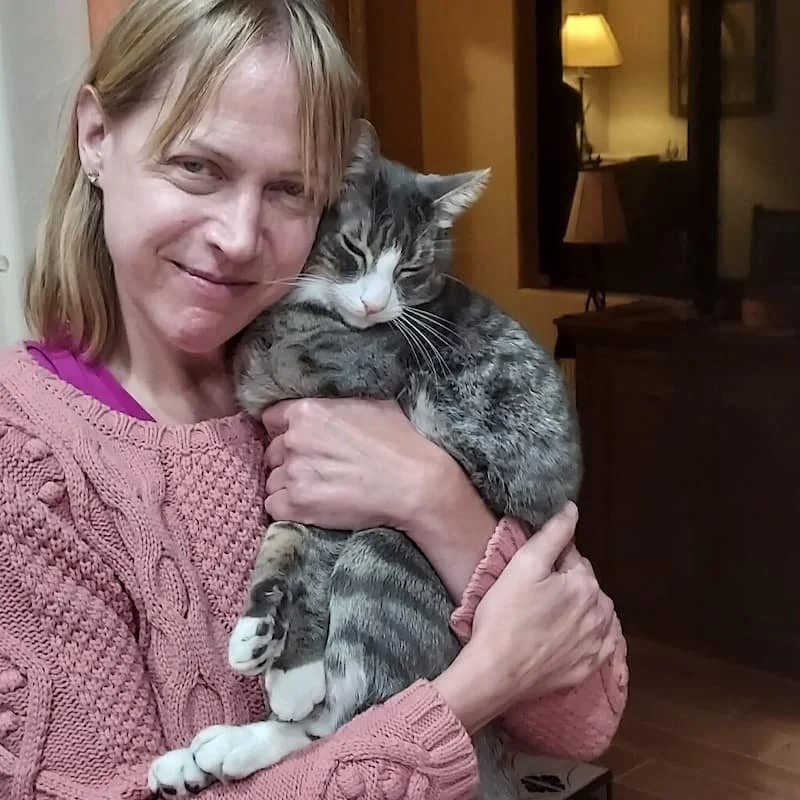
Outside of my work as a therapist, I’m actively involved in my church family as well as the Southwest Psychoanalytic Society and Southern Arizona Psychological Association. I’m a huge cat lover—and have been ever since I was a young girl. My spouse and I have a young cat named Alvie whom we adore!
If you want to include me on your journey toward healing and restoration, I encourage you to connect with me!
Dr. Liesl Scalzitti is a licensed psychotherapist in Tucson, Arizona. She has a BA in Psychology from Beloit College in Beloit, Wisconsin, a Master’s in Social Work from Washington University in St. Louis, Missouri, and a PhD in Clinical Psychology with an emphasis in Depth Psychology from Pacifica Graduate Institute in Santa Barbara, California. Dr. Liesl also has a certification in Psycho-analytic Psychotherapy from the Psychoanalytic Center of California, Los Angeles.
As a private pay practice, I do not accept insurance, so I can provide care that is personalized, flexible, and centered on your needs.