

The holidays can stir up grief for a home you no longer have, whether it was sold, lost, left behind, or changed beyond recognition. Understanding why this particular loss resurfaces during the holidays starts with recognizing just how much of our sense of home is tied to the lives we lived there.
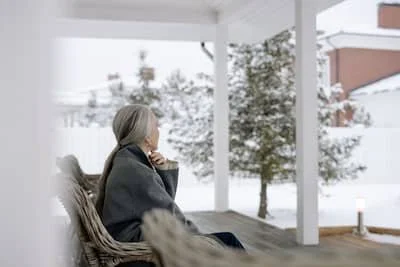
Losing Home and The Memories It Holds
Home is more than a building. It holds the unspoken understanding of where everyone sat and the comfort of knowing exactly where you belong. When we lose that because a parent died, the house was sold, a job forced a move, or natural disaster took everything, the loss is real and emotional.
Grief over losing a home involves more than the structure itself. The house could stand for a person, a stage of life, a version of yourself, or a family that no longer gathers as before.
Holidays sharpen the grief because they run on ritual and place. You may drive past your old street and see someone else’s lights in the windows, or stand in a rented kitchen trying to recreate a recipe that only ever worked in the old oven.
Why This Grief Goes Unrecognized

Many handle a loss like this by managing it, which is useful while dealing with logistics. However, it can leave grief unacknowledged until the holidays when memories become harder to set aside.
A move or home sale does not bring the shared rituals or expressions of sympathy that often follow a death. Others may assume you have moved on, while you may feel guilty about grieving when you have another place to live.
Listening to What the Feeling Is Saying
While the instinct is to squash sadness or dread around the holidays, we could instead view them as messengers. Listening to them resolves more than any attempt to talk ourselves out of the mood.
Try naming the feeling before deciding what to do with it. Sadness may come from missing the people who gathered in the house. Anger might stem from having little say in leaving. You could feel guilty about being relieved to leave a difficult home. Maybe you long for a period of life that has ended.
Putting the emotion into words helps clarify what you are grieving. You do not have to find a positive lesson in it. Acknowledging the feeling allows you to understand what you are grieving, even when the people around you expect you to be cheerful.
Keeping Your History While Making New Traditions
Trying to replicate what you lost may only make the absence louder. What would it mean to honor the old home rather than rebuild it? For some people that is keeping one tradition or inventing a new one. For others it is setting out a single object from the house or telling a story about the place.

You might also involve family members in deciding which traditions deserve a place in your current celebrations. Children or siblings may have their own attachments to the former home, and their memories may differ from yours. Talking about those differences can help everyone understand what the old home represented to the family, while allowing each person to develop their own relationship with the holidays as circumstances change.
Grief Counseling Is for All Losses
Grief for a home eases when given a place to go, and the weeks around the holidays can be a natural time to start.
Working with a grief counselor can give you a steady setting to explore what the house meant, what you are mourning, and how to live with those feelings rather than push them away. Contact me to set up an appointment.